Post-construction cleaning in Watertown, NY needs a detailed work list covering dust, fixtures, new finishes and the cleanup phase requested. Describe the project and materials before asking for a quote, then settle who removes debris and when the site will be ready for final cleaning.
Separate the cleanup phases
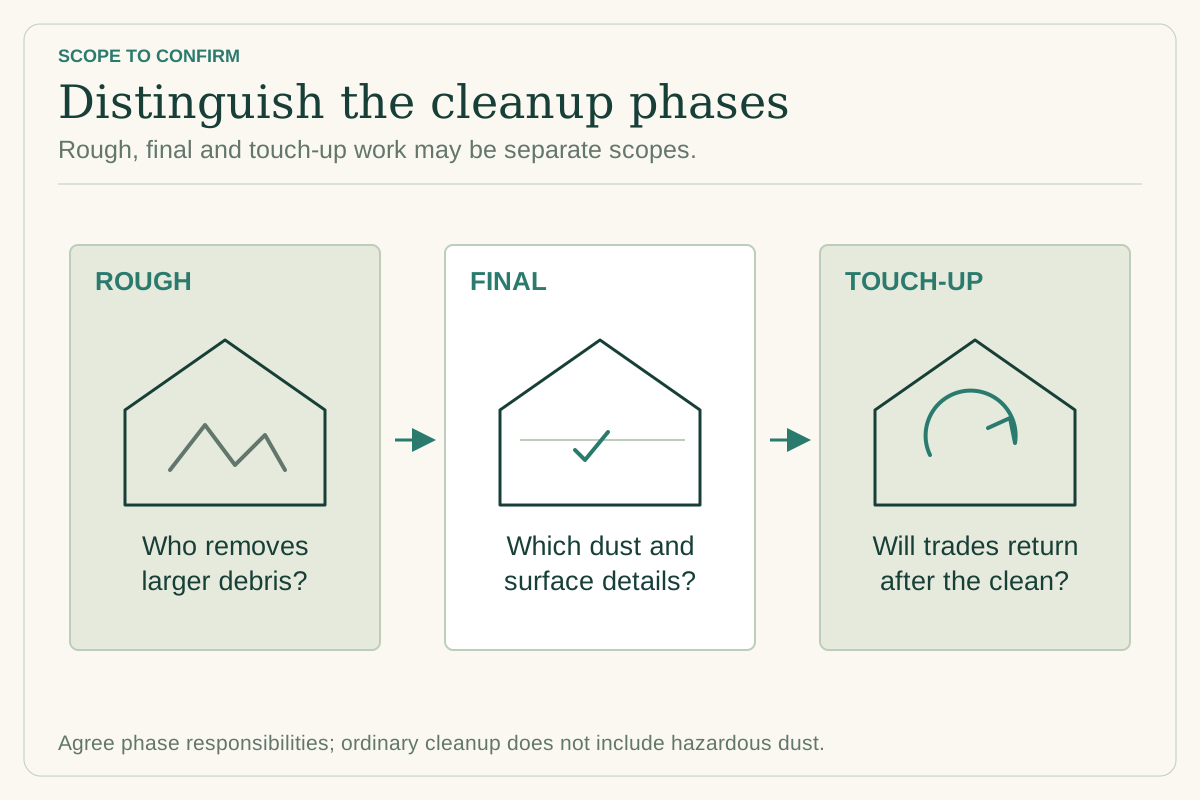
A rough cleanup removes agreed loose debris so later work can proceed. A final cleanup addresses the surfaces and details after dust-generating work is finished. A touch-up visit may be needed after a punch-list trade returns or furniture is installed. These phases serve different purposes and are not automatically included in one price.
Tell the provider which phase you need and who is responsible for each waste stream. If the contractor is expected to leave the project broom-clean, clarify what that means in the contract. The cleaning proposal should state the additional work needed before occupancy.
| Phase | Typical planning question | Responsibility to settle |
|---|---|---|
| Rough cleanup | What remains on the site? | Debris handling and disposal |
| Final detail | Have dust-generating trades finished? | Surfaces, fixtures and approved methods |
| Touch-up | Will trades or installers return? | Re-clean scope and extra visits |
Identify the dust before choosing a method
Drywall work, wood cutting, tile cutting, concrete work and unknown older materials can leave different residues. Tell the provider about those activities and any contractor reports. Do not assume all visible dust is ordinary household dirt or that every vacuum is suitable for the task.
OSHA's construction guidance addresses controls for respirable crystalline silica and limits certain housekeeping practices where they could create exposure. Suspected silica, asbestos, lead or other hazardous contamination belongs with the responsible qualified contractor and an appropriate control plan. An ordinary final-clean quote is not hazardous-material clearance.
Build the detailed surface schedule
List accessible cabinet interiors, shelves, doors, trim, fixtures, glass, tracks, bathrooms and floors. State whether the building is empty and whether protective film remains. Identify the rooms that are finished, the rooms still under construction and any surfaces excluded from cleaning.
Paint, mortar, grout haze, stickers and adhesive need separate attention. A process that removes residue may also mark a new finish. Ask the provider to assess these items before including them, and agree who approves a test area. Construction cleanup should not quietly become paint correction, glass restoration or repair work.
Protect new floors and installed finishes
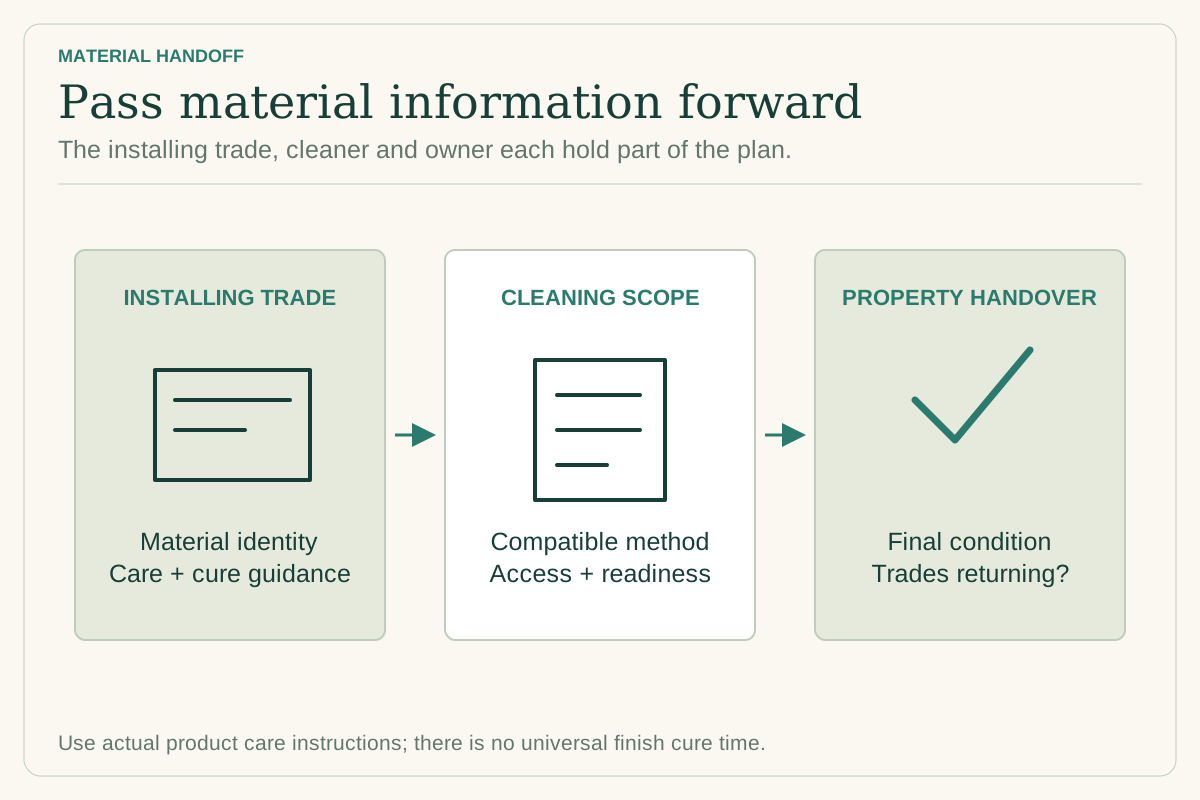
Gather the installer's and manufacturer's care instructions for new flooring, countertops, cabinets and glass. Some materials need a curing period before wet cleaning, floor protection removal or heavy traffic. The actual product instructions determine timing; a universal wait period would be misleading.
Discuss whether the floor needs cleaning only, a suitable finish treatment or neither. Carpet extraction, stone restoration and resilient-floor refinishing are separate tasks. Cleaning equipment, pads, chemicals and moisture must be chosen for the installed material rather than for speed alone.
Make the site ready for the visit
Coordinate the final clean after punch-list work that will create dust or debris. Arrange safe entry, lighting, water, power, clear walkways and access to the areas being quoted. Tell the provider about unfinished railings, exposed services, working equipment or areas that must remain restricted.
Discuss dumpsters and rubbish disposal with the contractor or property manager. Confirm whether the quoted crew removes any debris or only cleans after it has been removed. Include the occupancy date and any inspection or furniture delivery in the schedule, with time for the agreed drying and walkthrough.
Request a phase-specific quote
Have the project type, approximate area, material list, cleanup phase, current photographs if requested and expected completion date ready. Ask whether an on-site review is needed. The provider should identify assumptions, exclusions, additional visits and the process if the site is not ready on arrival.
Call with the project details and the tasks left behind. For contractor and owner alike, the proposal should name what will be cleaned, when the site must be ready and what happens if another trade returns afterward. Settle any additional visit before relying on the handover date.
Questions before you call
Can final cleaning happen while contractors are still working?
Some phased work may be possible, but ongoing cutting, sanding or repairs can create more dust. Discuss separate areas and repeat visits. A final handover clean is easier to define after dust-generating work ends.
Is all construction debris included?
Only what the proposal states. Large debris, packaging, hazardous material and hauling may be the contractor's responsibility or a separate service. Confirm disposal before the appointment.
Will cleaners remove paint or adhesive from glass?
Ask for a specific assessment. Glass coatings and surface condition affect what can be done safely. Do not assume scraping or chemical residue removal is included in normal window cleaning.
Does this service certify a property as safe to occupy?
No. Cleaning does not replace building approvals, hazardous-material assessment or required clearance. The responsible professionals must address those matters separately.
Useful references
Ready to describe the job?
Keep the location, scope and timing together when you call.