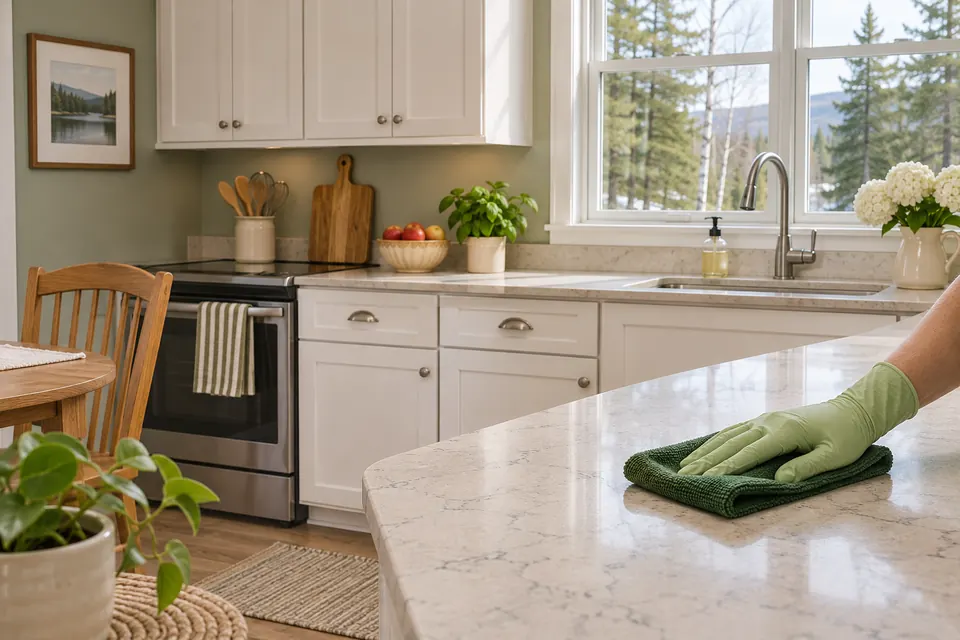
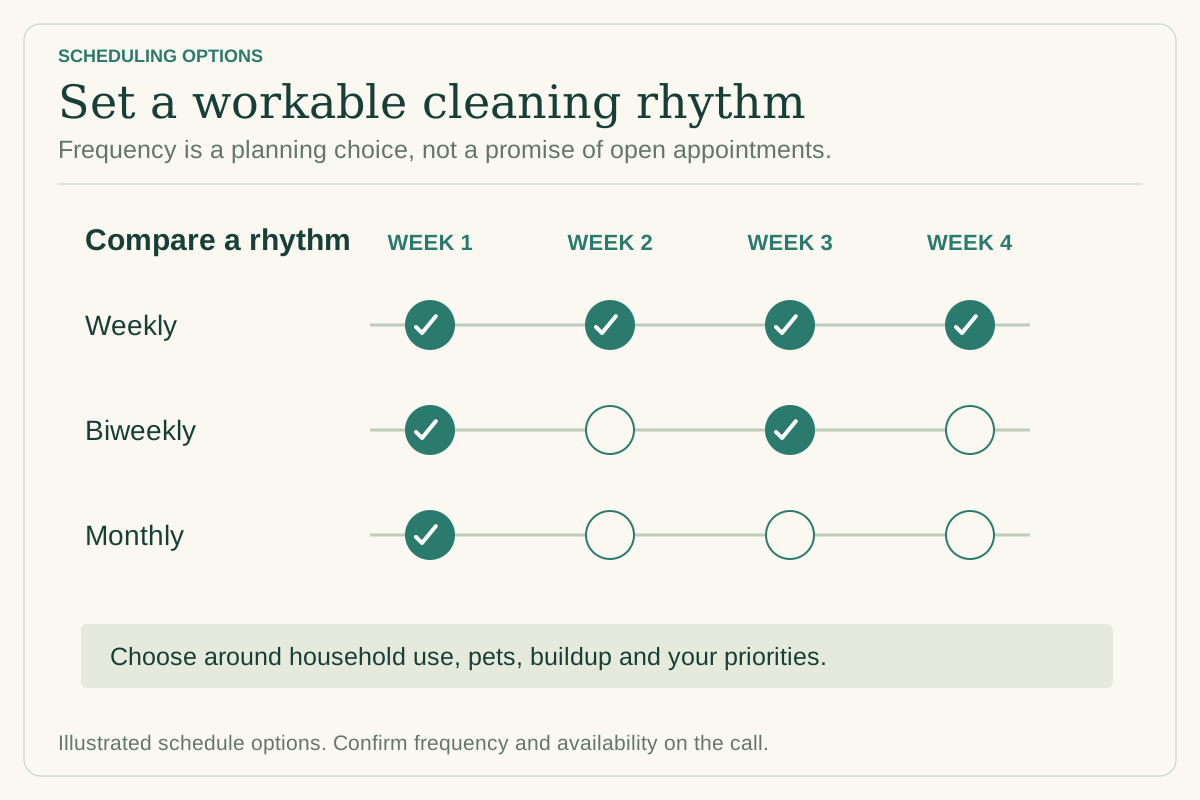
Recurring house cleaning in Watertown, NY can be planned around weekly, biweekly or monthly visits. Discuss what needs attention at every appointment, which details can rotate and how the first visit will differ from later maintenance. A written room list makes the schedule and price easier to agree.
Set a practical room-by-room baseline
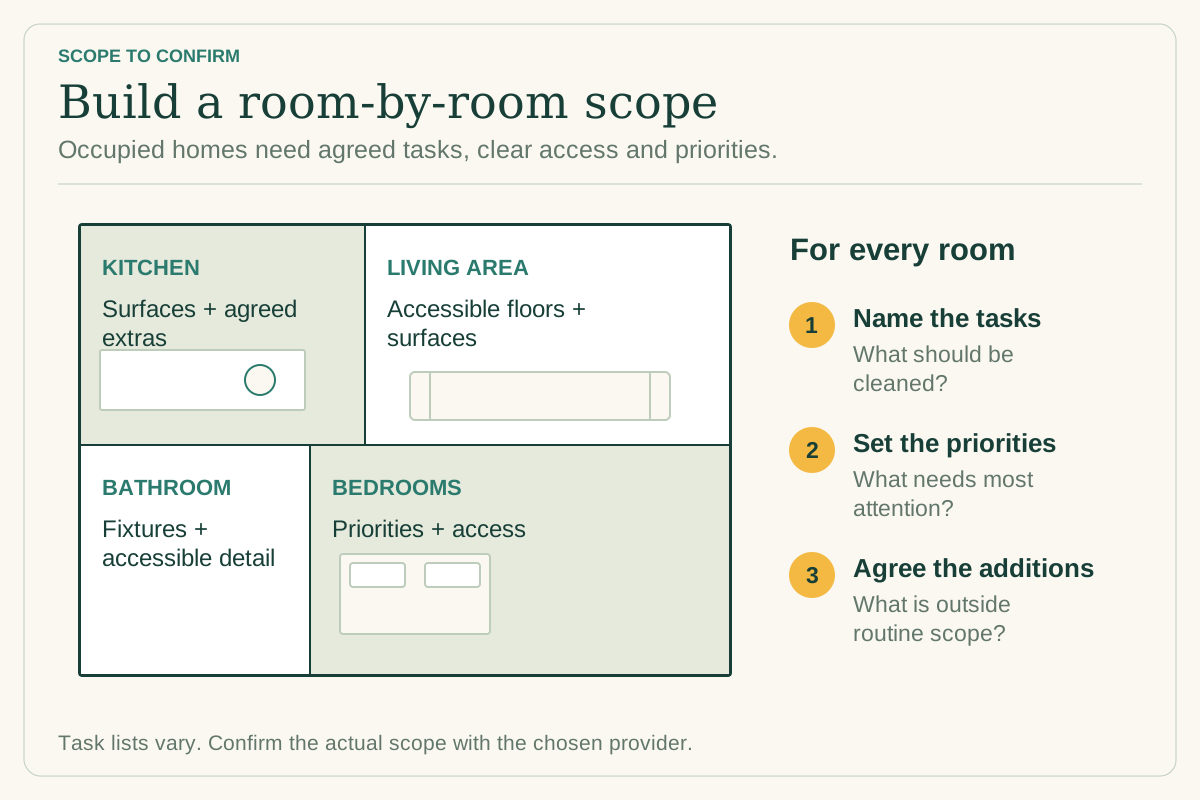
Write down the rooms to be cleaned and the surfaces that matter most. In the kitchen, distinguish wiping accessible counters and appliance exteriors from cleaning inside the oven or refrigerator. In bathrooms, specify fixtures, mirrors, shower surfaces and floors. Bedrooms and living areas may need accessible dusting, vacuuming and hard-floor care.
A useful baseline also says what remains untouched. A desk covered with papers, a display of fragile objects or a child's building project may need to stay as it is. Agree how the cleaner should handle these areas so that a tidy appearance does not depend on moving belongings without permission.
- Name each room and any rooms excluded from the visit.
- Identify delicate surfaces and their care instructions.
- Choose the two or three priorities that matter if time is limited.
Choose frequency around use and upkeep
A busy kitchen or frequently used bathroom may need attention sooner than a guest bedroom. Pets, household size, how much time people spend at home and the cleaning done between visits all affect the schedule. Discuss these factors rather than choosing solely by square footage.
If buildup has accumulated, ask whether a deeper initial visit is needed before maintenance begins. A recurring agreement should explain how the first appointment differs from later ones. Revisit the scope when occupancy, pets, a home office or the number of usable rooms changes.
Keep optional tasks explicit
Laundry, changing bed linens, washing dishes, organizing closets and interior appliance cleaning are not safe assumptions. Some providers include selected tasks; others quote them separately or do not perform them. The same applies to interior windows, cabinet interiors and cleaning beneath heavy furniture.
Use one written scope instead of a long wish list added on arrival. If you want a rotating extra, such as selected baseboards one month and accessible cabinet fronts another, ask whether that can fit the service arrangement. A provider can then explain the effect on visit time and price.
Prepare access, pets and supplies
Clear everyday clutter from the surfaces you want cleaned and put away valuables, medication and sensitive paperwork. Preparation makes the agreed surfaces accessible; it does not mean you must clean the house before a cleaning visit. Arrange a safe place for pets and share any door, parking or alarm instructions through the provider's agreed process.
Ask who brings supplies and equipment. If you require a particular product for stone, wood or another finish, provide the manufacturer's instructions before the visit. CDC guidance recommends choosing products suitable for the surface and following their labels. Stronger chemicals are not a substitute for correct material care.
Make the estimate easy to compare
Have the approximate home size, bedroom and bathroom count, preferred frequency and starting condition ready. Describe stairs, parking restrictions, pet hair, frequently used rooms and the optional tasks requested. If a quote is hourly, clarify whether it describes one person's labor or a team's time on site.
Before agreeing, ask about minimum charges, cancellation terms, skipped visits, payment and how to report a missed task. Compare proposals with the same rooms and tasks. A lower headline price may describe a shorter or narrower visit, while an expensive proposal may include work you do not need.
Use each visit to improve the next one
A short, specific feedback note is more useful than changing the entire checklist after every appointment. Name the missed surface or the priority that needs more attention, then check whether it belongs in the agreed scope. Keep special requests separate from the normal baseline.
Call with your room list and preferred schedule to discuss the first visit. Mention whether the home needs a deeper reset before regular maintenance begins. If you are moving out or finishing a renovation, start with the service checklist for that situation.
Questions before you call
Is recurring cleaning the same as a deep clean?
Usually they describe different levels of work. Recurring cleaning maintains accessible everyday surfaces. An initial intensive clean may address buildup and added detail. Ask for the specific task list for each proposal.
Do I have to be home during every visit?
That depends on the provider's access policy and your preference. Agree keys, entry instructions, alarms, pets and the final lock-up process before allowing an unattended appointment.
Are cleaning supplies included?
Confirm this directly. If you want particular products used, tell the provider about them in advance and check compatibility with the surfaces and equipment involved.
Can the cleaner work on only part of the house?
Ask about a limited-room scope and any visit minimum. Identify the rooms and priorities so the proposal reflects the work requested rather than an assumed whole-home package.
Useful references
Ready to describe the job?
Keep the location, scope and timing together when you call.