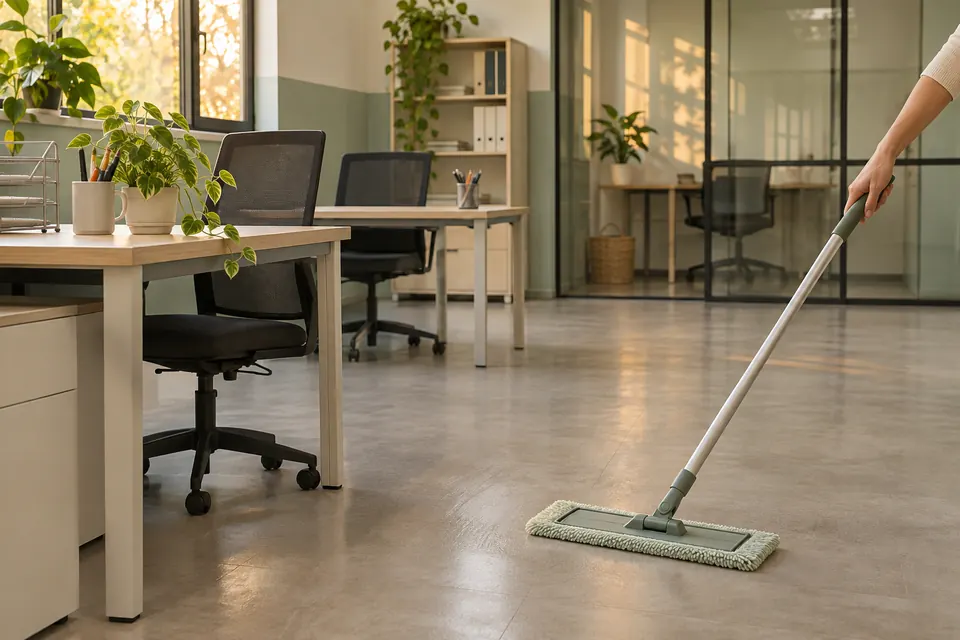
For commercial cleaning in Watertown, NY, prepare a facility description and a task schedule before comparing proposals. This page covers ordinary office and community-business janitorial work, from accessible work areas to restrooms, common spaces and periodic floor care.
Describe the facility and its operating pattern
Start with the approximate area, number of floors, restroom count, occupancy and opening hours. Identify high-traffic entrances, shared desks, customer areas and rooms that need restricted access. A walk-through can reveal differences that a square-footage total alone misses.
Explain whether the work is a one-time reset or an ongoing contract. For a recurring program, estimate the daily, weekly and occasional tasks separately. Busy periods, seasonal occupancy and after-hours events may change the plan, so ask how changes will be authorized and priced.
Create a task-and-frequency schedule
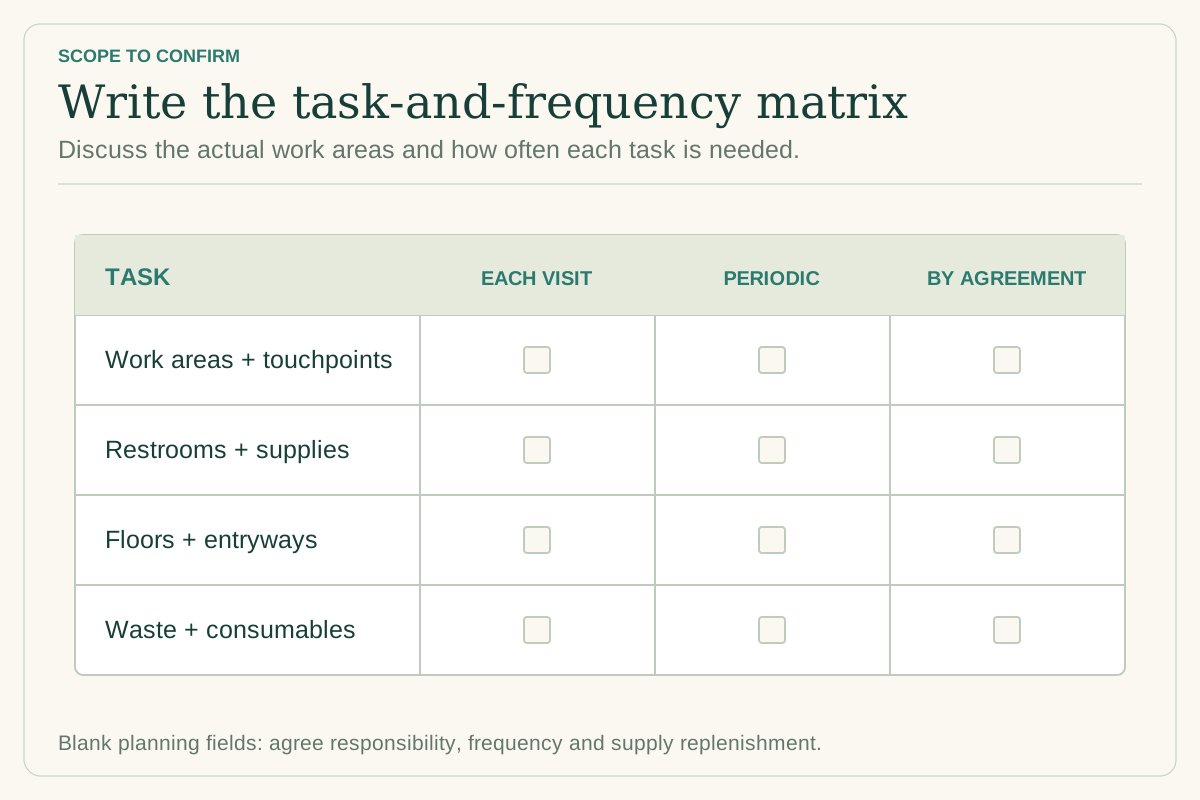
Group the work by function rather than writing a broad instruction to clean everything. Work areas may include accessible desks, bins and floors; restrooms need a different list from reception or a kitchenette. Decide who clears work surfaces and whether cleaners handle dishes, food waste or recycling.
Periodic work belongs in the schedule too. Carpet extraction, interior glass, high dusting, grout work and floor refinishing can be quoted separately. This makes it easier to see what the regular visit includes and avoids assuming specialist treatment is part of routine mopping or vacuuming.
- Daily or per-visit tasks for occupied areas.
- Weekly or rotational tasks that do not need every visit.
- Periodic specialist work with a separate scope.
- Consumables and waste responsibilities.
Agree access and information security
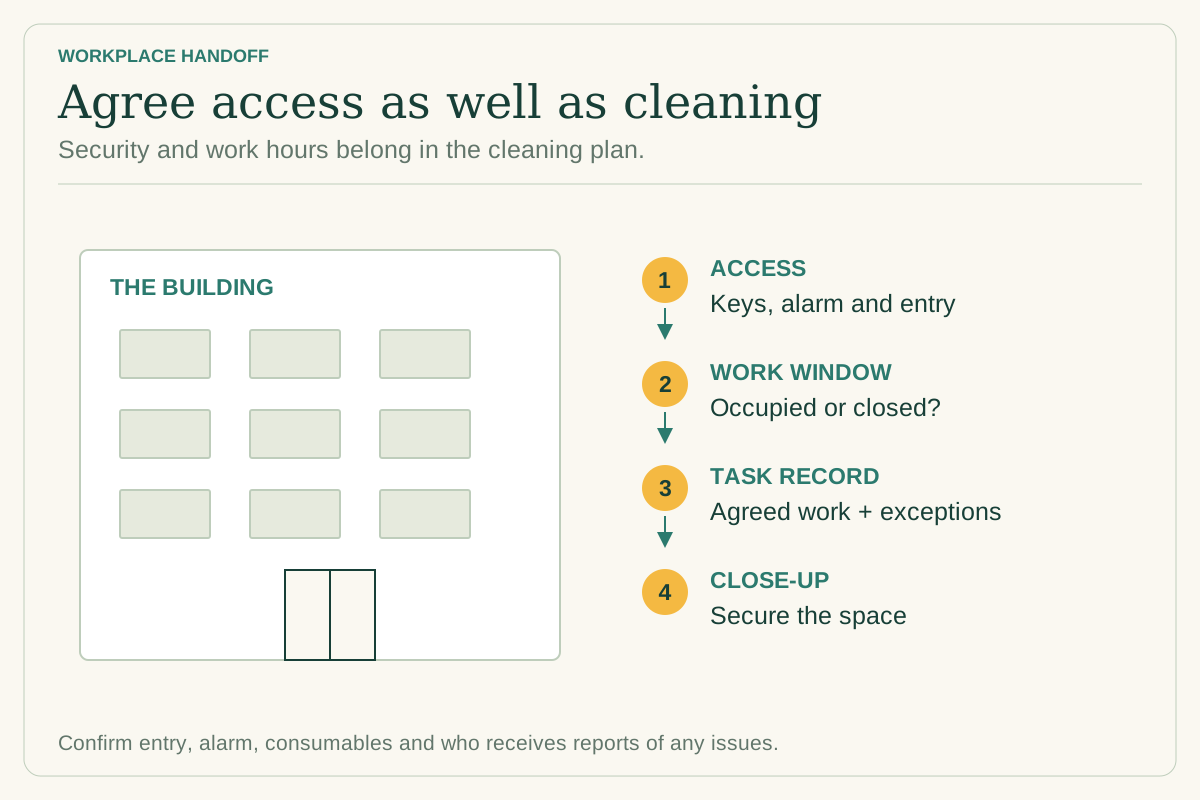
Discuss keys, alarm codes, signing in, parking, elevators and final lock-up with the provider. Specify secure rooms, records, equipment and surfaces that should not be touched. Cleaning should not depend on a worker guessing which papers may be moved or which computer can be unplugged.
Identify the person who can approve entry or answer questions after hours. For shared buildings, separate tenant work from common-area responsibilities. A reliable scope also explains how access problems, damaged items or an unfinished task will be reported without exposing confidential business information.
Treat cleaning and disinfection as distinct tasks
CDC guidance for community facilities distinguishes routine cleaning from disinfecting and recommends following product directions. If disinfection is part of the plan, specify the surfaces and applicable procedure. A general promise to sanitize a building is not a substitute for an agreed process.
Healthcare, food production, childcare, industrial contamination and other regulated environments may need different procedures and trained personnel. Do not apply an ordinary office checklist to those settings. Explain the facility type at the first call so the provider can assess whether it accepts the work and has the required capability.
Decide who supplies what
Confirm responsibility for cleaning products, equipment, bin liners, soap, paper goods and storage. A consumables line should explain whether stock is merely checked, restocked from your cupboard or purchased by the provider. Also identify access to water, power and a suitable service area.
Give the provider flooring and furniture care instructions. Specialty finishes, electronics and display materials need compatible methods. Ask how products are identified and how staff can access relevant safety information, especially if cleaning occurs while employees or customers are present.
Compare bids and review the program
Compare the same task schedule, visit frequency, areas, supplies and periodic work. Ask about supervision, quality checks, substitution when a worker is absent, contract changes and the process for reporting a missed item. Request evidence for any insurance or qualifications important to the account.
Call with a short building summary, the address and proposed cleaning schedule. Discuss the account size and working hours before arranging a walkthrough. Once service begins, review specific tasks and missed items against the agreement rather than judging the work by the smell of a cleaning product.
Questions before you call
Are office cleaning and janitorial service separate pages?
They often describe the same ongoing workplace task. Here they share one planning scope. Specialty floor, carpet, window and construction work are separate because their methods and decisions differ.
Can cleaning take place outside office hours?
Ask the provider about staffing and available time windows. Also agree access, alarms, supervision and lock-up. After-hours coverage should be confirmed for the specific account.
Does a commercial quote include paper towels and soap?
Only if the agreement says so. Separate product purchasing from checking dispensers and restocking supplies already held on site. Clarify price and replenishment responsibilities.
Can an ordinary office plan cover a medical clinic?
A clinic may have regulated procedures and areas outside general office cleaning. Describe the actual use and have the provider confirm appropriate training, processes and account eligibility before proceeding.
Useful references
Ready to describe the job?
Keep the location, scope and timing together when you call.