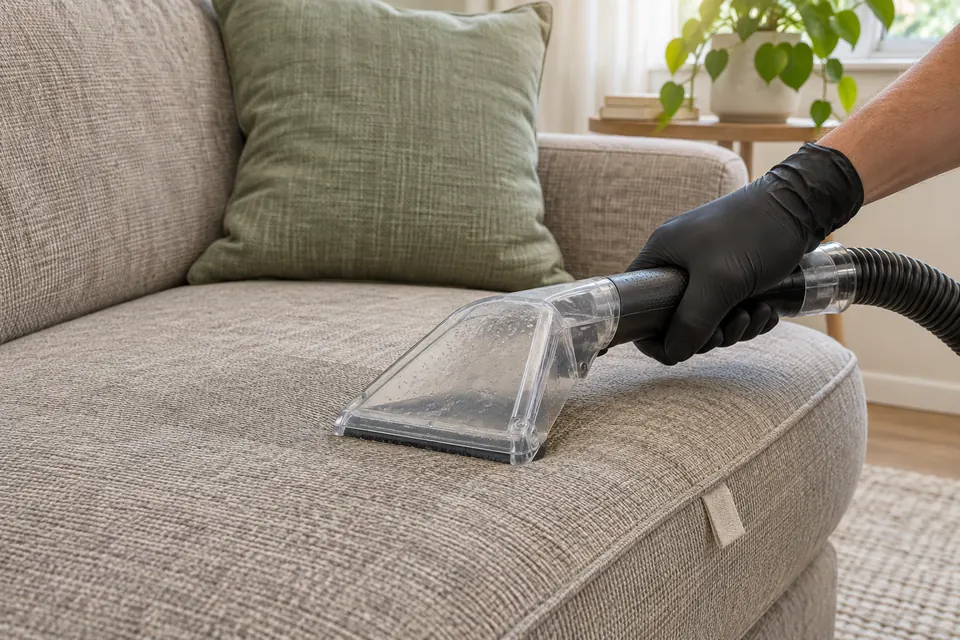
Upholstery cleaning in Watertown, NY starts with the fabric, furniture construction and kind of soil involved. Have the care label and a piece-by-piece list ready when you call. They help establish which treatment is suitable and how long the furniture may be out of use.
Identify the piece and its care instructions
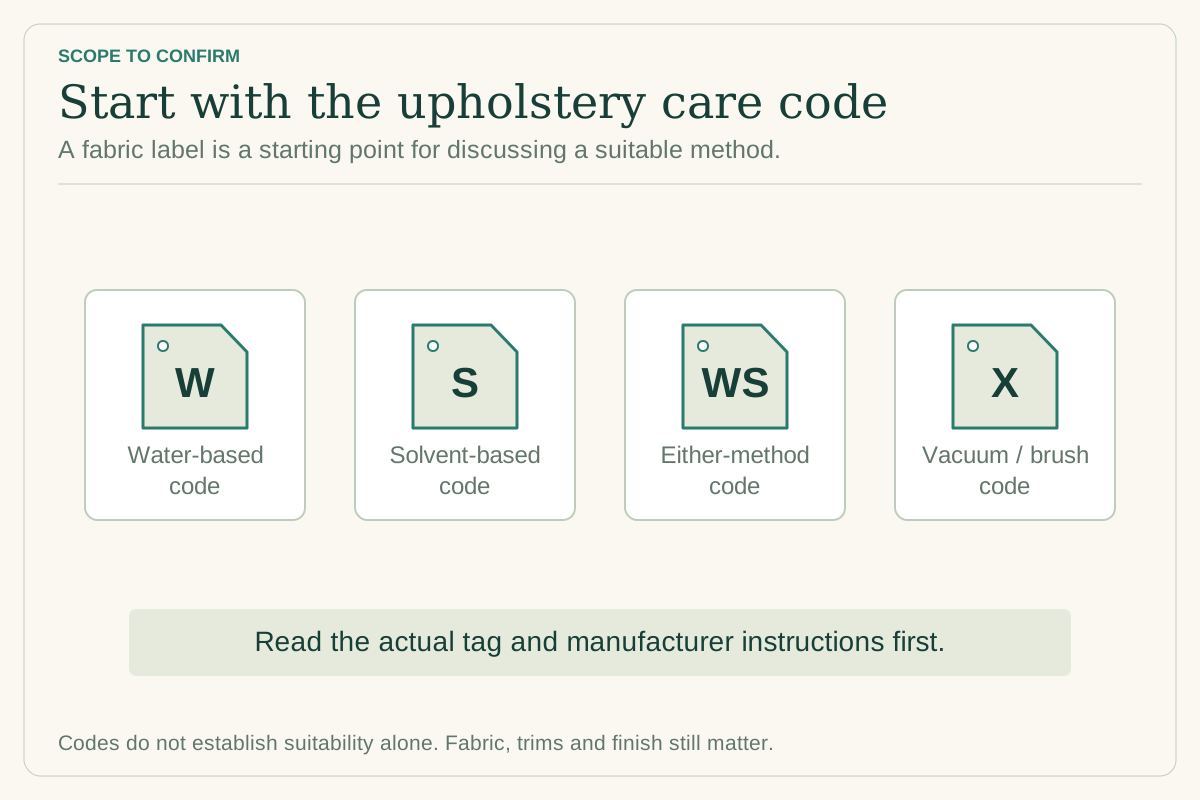
Look for the manufacturer's tag, fabric reference and any cleaning instructions under cushions or on the furniture documents. If the label uses a care code, share it exactly rather than guessing what a similar-looking fabric permits. Construction, dyes, trims and the underlying filling can matter as well.
Manufacturer guidance can place important limits on water, solvents, extraction and removable covers. Bernhardt's instructions, for example, give different restrictions for different care codes. They illustrate why the actual maker's guidance should lead the discussion; they are not a universal cleaning recipe for every brand.
Describe the affected areas separately
List the pieces, approximate dimensions, number of cushions and whether both sides need attention. State whether the concern is everyday body soil, food, drink, pet residue or an unknown mark. Explain how long it has been present and whether the furniture has been cleaned before.
Use a clear distinction between stains, fading, abrasion and damage. Cleaning may address soil without reversing worn fibers, discoloration or damaged finishes. Ask the provider to describe realistic outcomes after assessment, including any area where a test is needed before work continues.
Ask about the proposed method
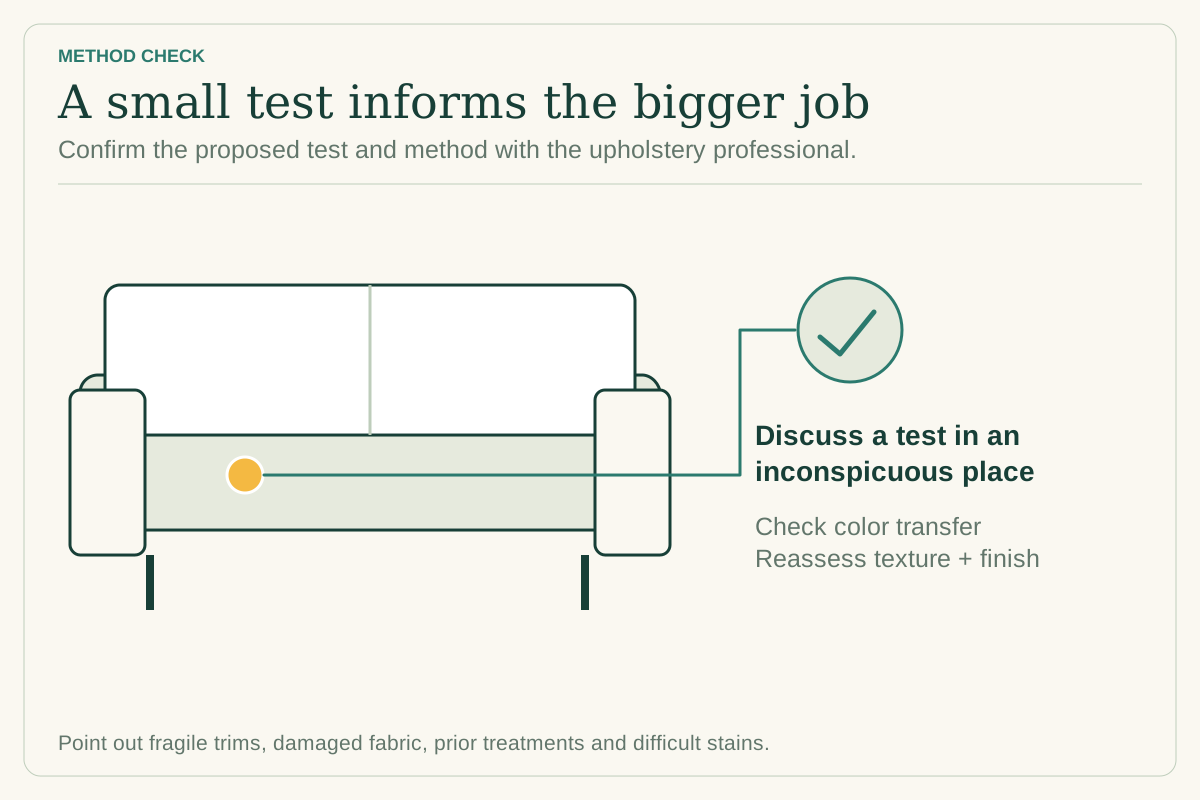
The proposal should explain how the fabric is assessed, how loose soil is removed, what treatment is proposed and how moisture or residue will be managed. Ask whether an inconspicuous test is appropriate. Do not choose solely because an advertisement uses the words steam, dry or deep.
Avoid combining several home remedies while waiting for an appointment. Tell the provider what was used, including a product name if available. Prior treatment can affect assessment and results. Leather, suede, antique textiles and specialist decorative materials should be identified at the start because they may require a different service.
Prepare the room without dismantling the furniture
Clear small objects and provide access around the pieces included in the quote. Put away fragile items and arrange a safe space for pets and children. Tell the provider about stairs, narrow doors, heavy sectionals and furniture that cannot be moved.
Do not remove and wash a zipped cushion cover simply because it can be taken off. Check the actual care instructions first. Also ask whether the cleaner handles loose cushions, pillows, skirts, recliners or concealed areas. A sofa's visible seating surfaces and every fabric component are different scopes.
Plan how the furniture will be used afterward
Ask for a drying estimate suited to the fabric, filling, method and room conditions. Clarify when cushions can be replaced and when people or pets can sit on the furniture. If the piece is needed for guests that evening, discuss the deadline before booking.
The provider should explain any ventilation or positioning instructions. Avoid covering damp fabric or rushing use based on a generic advertised dry time. If moisture, an unexpected mark or an odor remains beyond the expected period, follow the provider's reporting process so the problem can be assessed.
Compare a piece-by-piece quote
Give each piece its own description: sofa, loveseat, sectional, armchair, dining chair or ottoman. Ask how size and cushions are counted, and whether stain or odor treatment is extra. Confirm any minimum charge and whether a specialist item is accepted before including it in the visit.
Call with the furniture list, care-label information and main concern. Describe any carpet work you want done during the same appointment, while keeping the furniture's method and task list separate. Ask for the preparation and drying instructions for each piece.
Questions before you call
Can every sofa be steam cleaned?
No single method suits every fabric and construction. Share the care instructions and let the provider assess the material. A method suitable for one sofa may be restricted for another.
Can I put removable cushion covers in the washing machine?
A zipper does not establish that a cover is washable. Follow the furniture maker's instructions and ask the provider before removing or laundering covers.
Will upholstery cleaning remove pet odor?
That depends on the source and how deeply it has reached the filling or frame. Explain the history and affected areas. Ask about treatment limits instead of assuming surface cleaning resolves every odor.
How is the price worked out?
Providers may count pieces, size, seating positions, cushions and condition differently. Request a written description of what is included so that two quotes can be compared fairly.
Useful references
Ready to describe the job?
Keep the location, scope and timing together when you call.