
Rental turnover cleaning in Watertown, NY can describe apartment turns between leases or guest changeovers in a short-stay property. Explain which workflow you need, how often the property turns and what must happen between occupants. Cleaning, laundry, replenishment and reporting should each have a clear owner.
Choose the workflow for the property
For an apartment turn, the cleaning may follow maintenance, painting or repairs before a new tenant receives the keys. For a guest changeover, the deadline may be between checkout and check-in, with linens, consumables and presentation included. These are different operating plans even when some room tasks overlap.
State whether you need a single unit, multiple simultaneous vacancies or repeated visits at one property. Give the occupancy pattern and the realistic access window. Do not assume that a cleaner who accepts one home visit can provide multi-unit coordination or short-notice changeovers.
Create a stable property checklist
List kitchens, bathrooms, sleeping areas, living spaces, appliances and floors. Add unit-specific items such as a sofa bed, outdoor seating or multiple entrances. A property checklist should identify what gets cleaned every turn and what belongs on a periodic detail schedule.
For guest properties, separate presentation tasks from cleaning: arranging bedding, checking agreed supplies or returning a room to a documented layout. Keep the standard observable rather than relying on instructions such as make it perfect. Photographs used as a reference should show the setup without exposing previous occupants' private information.
- Every-turn room and surface tasks.
- Periodic deep cleaning and specialist floor care.
- Linen and supply responsibilities.
- Condition-reporting and completion checks.
Decide how linen and consumables will work
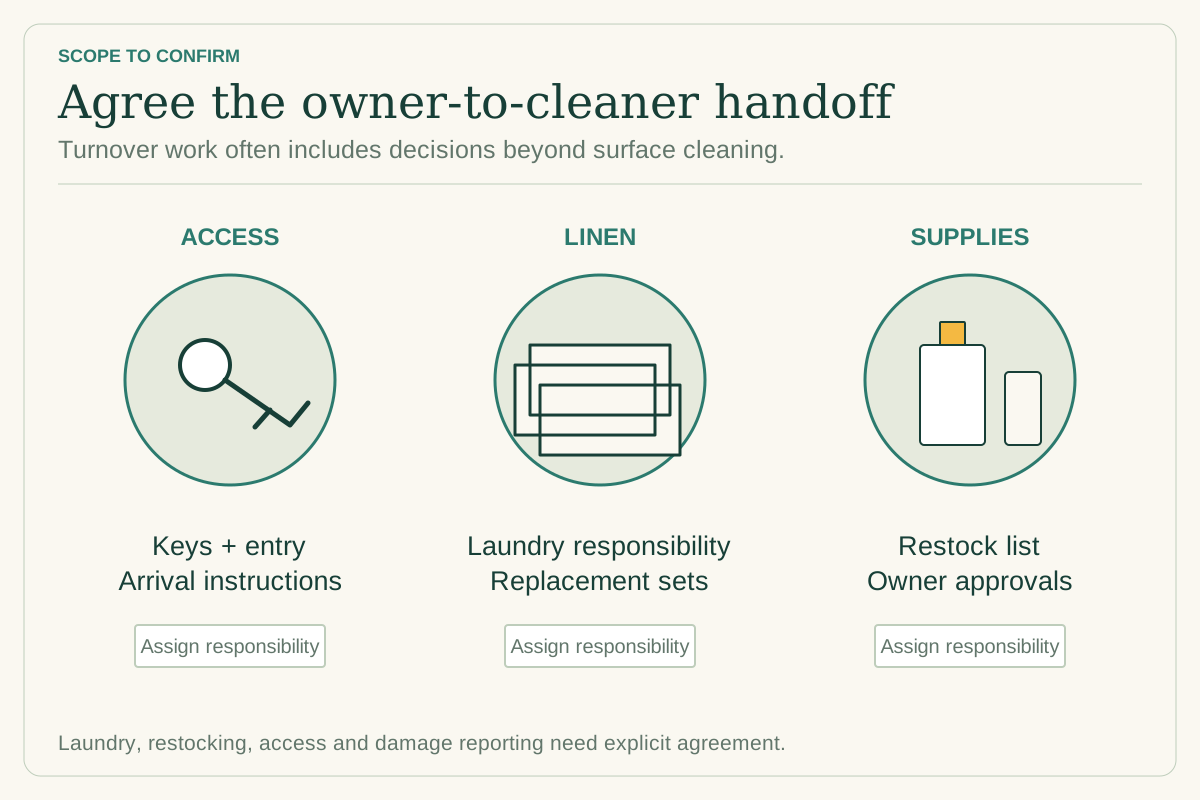
Clarify whether the provider changes linen, launders it on site, takes it elsewhere or uses stock you supply. Agree who manages spares, damaged items and quantities for back-to-back visits. Laundry capacity and drying time can affect whether a short changeover window is realistic.
CDC recommends following textile care instructions and drying laundered items completely. Plan enough clean stock to avoid depending on a rushed load. For consumables, distinguish checking inventory from buying products, reimbursing purchases or replenishing from a locked store cupboard. Those tasks need their own agreement.
Separate cleaning, cleanouts and maintenance
Define who reports damage, missing items, leaks, pests or unsafe conditions and who can approve additional work. The cleaner should not have to decide whether abandoned furniture may be discarded or whether a repair is acceptable for the next occupant.
Large rubbish removal, bodily waste, hazardous material, infestation and building damage can change the assignment. Explain the escalation process before the first turnover. For apartment turns, put repair and dust-generating trades ahead of the final clean so the unit is not cleaned repeatedly without a clear reason.
Build a realistic access and communication plan
Agree when vacancy is confirmed, how entry is authorized and who sends changes to the schedule. State parking, keys, lockbox procedures, alarms and any building restrictions. For on-post property, commercial access must be confirmed separately; a place in the calendar does not establish entry permission.
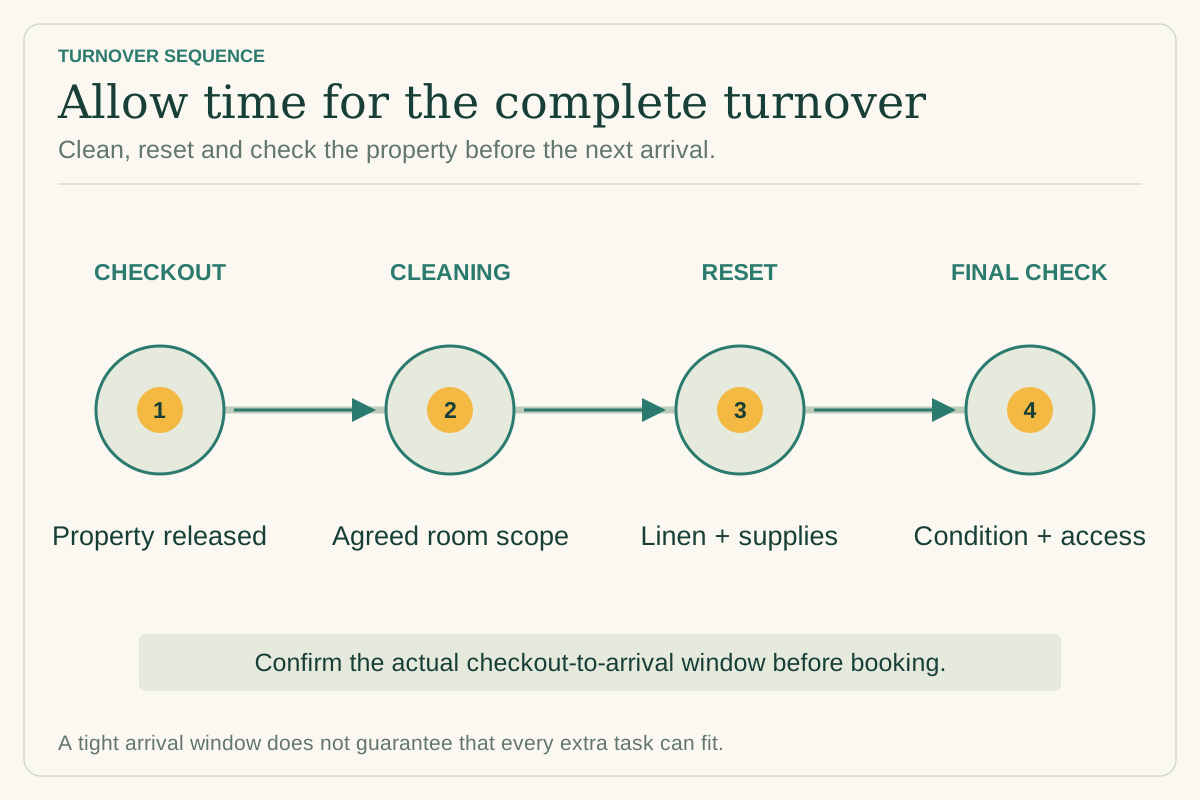
Specify the completion check and what happens if an outgoing occupant leaves late or the unit is substantially dirtier than expected. Ask whether the provider can handle the required window and what backup arrangements, if any, it offers. Do not rely on guaranteed same-day coverage without a specific agreement.
Price the normal turn and the exceptions
Compare proposals using the same room checklist, linen plan, consumables and reporting duties. Identify separate charges or approval thresholds for heavy condition, deep cleaning, appliance interiors, carpet treatment, rubbish or extra travel. A standard turnover price needs a definition of standard condition.
Call with the property type, unit count, address, schedule and checklist to discuss an account. Explain how exceptions will be approved and reported. A repeatable task list lets owners and managers review each turn consistently, while keeping repair decisions and guest or tenant communications with the responsible person.
Questions before you call
How is turnover cleaning different from move-out cleaning?
Move-out cleaning usually serves a one-time vacant handover. Turnover planning is for a repeat owner or manager workflow, often adding scheduled access, linen, supplies, reporting and coordination between occupants.
Are linen washing and restocking included?
Only if agreed. Specify who supplies linen and products, where laundry happens, who pays for purchases and how shortages or damaged items are reported.
Can a provider handle several apartments at once?
Ask about capacity, staffing and the time window for the specific property. Multiple vacancies need a confirmed plan rather than an assumption based on a single-unit quote.
Can a turnover clean guarantee five-star reviews?
No. Reviews depend on the whole guest experience and many factors outside cleaning. Use an agreed observable checklist and a clear reporting process to assess the work.
Useful references
Ready to describe the job?
Keep the location, scope and timing together when you call.