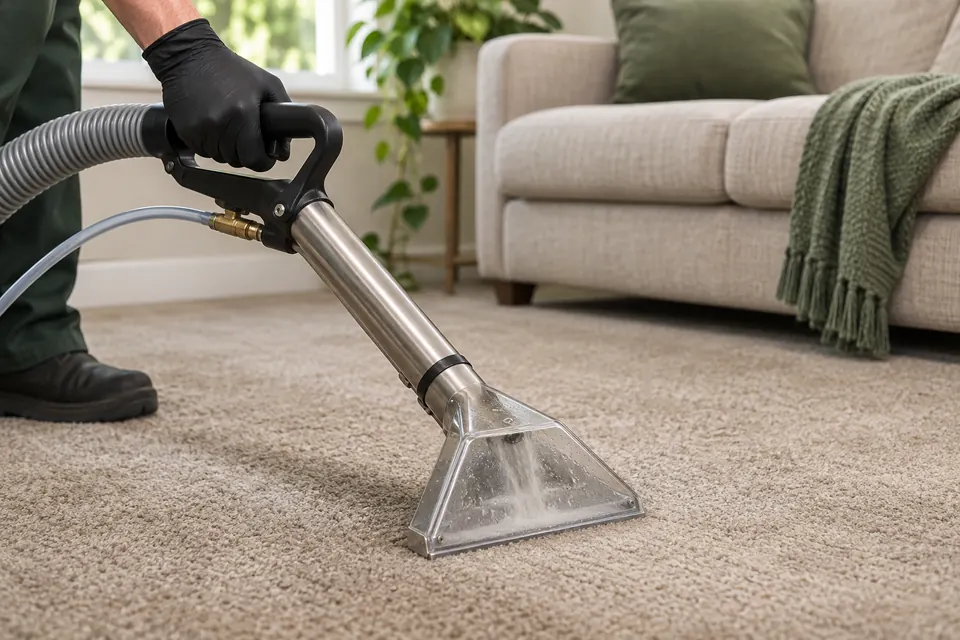
For context, the Carpet and Rug Institute's residential standard describes 6–12 hours in its do-it-yourself extraction section. That method-specific guidance is not a guaranteed drying time for every professional treatment, material or home.
Ask which method and carpet are involved
Start with the carpet manufacturer's care instructions and tell the provider about the material where known. Wall-to-wall carpet, rugs and upholstered pieces should not be treated as interchangeable. Explain previous cleaning, stains, products already used and any earlier drying problems.
Ask how the chosen cleaning method affects aftercare and when the provider expects normal use to resume. The useful answer should connect the treatment to your property, not simply repeat a standard number of hours. Mention stairs, rooms needed that evening and a fixed move-in deadline before the appointment is agreed.
Keep air movement and moisture conditions in the plan
Extraction performance and drying conditions both matter. CRI's residential guidance calls for thorough moisture extraction and ventilation, while Shaw Contract's maintenance documentation also emphasizes air movement. Follow the instructions that apply to the carpet and treatment rather than improvising a faster process.
Ask what the provider recommends for your home's HVAC, fans or dehumidification. Opening windows is not automatically helpful: outdoor weather and humidity matter. Keep equipment positioned safely and avoid closing a wet carpet into a stagnant room. Do not use unapproved heat or add more water or products to try to speed the result.
Plan movement through the home
Before cleaning, decide how people and pets will avoid the treated area. Tell the provider if a hallway or staircase is the only route to another room. Ask when light access and normal use are appropriate, and take care at transitions onto hard flooring.
The surface feeling dry at one spot is not a complete assessment of the carpet's backing or moisture beneath furniture. Follow the agreed aftercare instead of judging readiness from a quick touch alone. If access is unavoidable, ask for instructions specific to the treatment rather than assuming any shoe cover or shortcut is suitable.
Return furniture and belongings only as directed
Agree in advance which items will move and who moves them. Heavy furniture, beds and storage may limit the area treated. Ask about appropriate protection under legs and when it can be removed; do not place unprotected furniture on damp carpet based only on the elapsed clock time.
Keep boxes, rugs and other coverings away until the provider says the carpet is ready. If another service, inspection or mover follows, allow a practical gap and explain the sequence. The appointment should account for drying and furniture arrangements as well as the period when equipment is inside the home.
Know when to follow up
If the carpet remains wet beyond the provider's expected window, contact them promptly with the cleaning time, affected rooms and current conditions. CRI's DIY extraction guidance specifically advises professional follow-up when wetness persists beyond 12 hours; it is a follow-up cue, not a universal diagnostic threshold.
Report unusually wet patches, unexpected odor, color transfer or returning spots without adding another treatment yourself. Describe what you notice and ask for the appropriate next step. A provider can assess the job and material; a web checklist cannot determine whether a backing, subfloor or separate moisture source is involved.
Questions before you call
How long should I stay off carpet after cleaning?
Follow the provider's instructions and wait until the treated carpet is ready for use. CRI's 6–12-hour example concerns DIY extraction, not a guarantee for every job.
What is the fastest way to dry carpet after cleaning?
Use the airflow and moisture-control plan recommended for your carpet and treatment. Outdoor humidity matters; do not improvise with unapproved heat or added chemicals.
What if the carpet stays wet longer than expected?
Contact the provider promptly and describe the affected areas and conditions. A surface touch check alone cannot assess backing, the subfloor or another moisture source.
Useful references
Ready to describe the job?
Keep the location, scope and timing together when you call.